House Foundations Auckland.
Concrete slabs, Timber piles, Masonry blockwork, and Formwork.
We Build Foundations precisely to spec, Ribraft slabs and Piles
Foundations contractor services.
Concrete slabs.
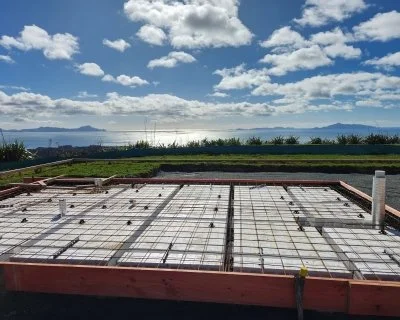
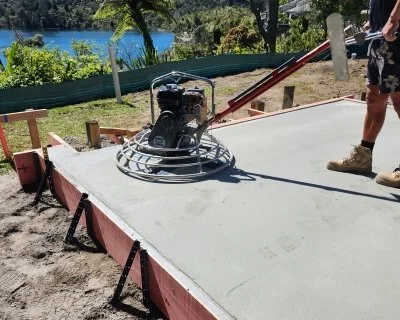
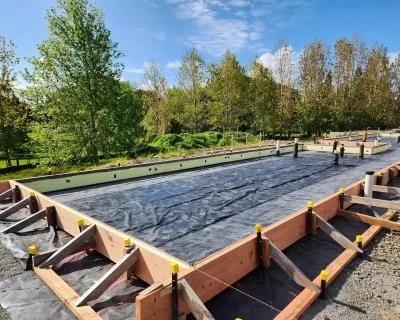
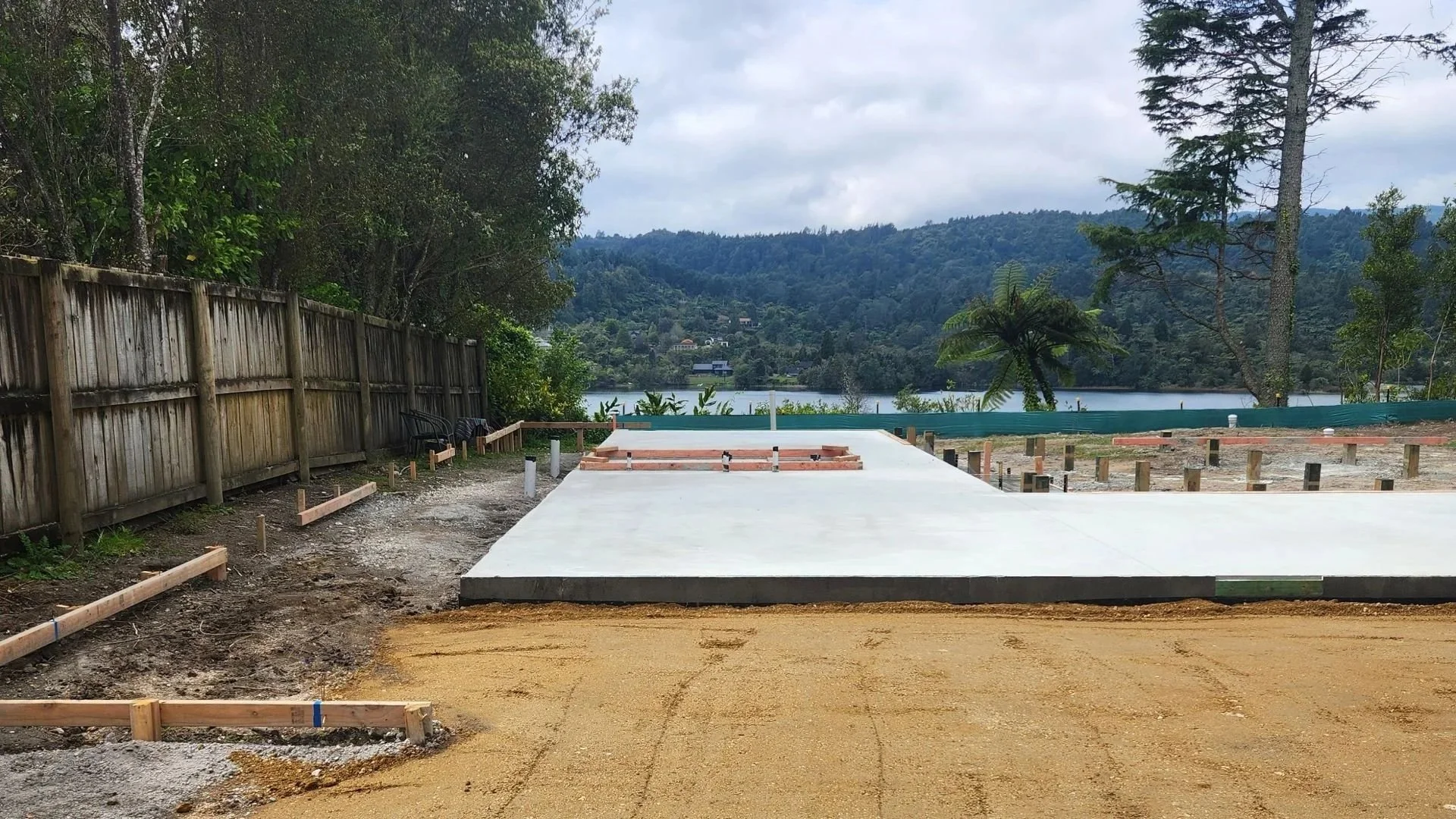
Modern housing raft slabs contain insulation and heating elements encased in concrete and are 300mm or 400mm thick. Traditional slabs for patios, air conditioning or gas bottle plinths are generally 100-150mm thick. Line and level accuracy is crucial to ensure your timber framing sits square and so any polished concrete finishes requiring no more than a 0.5mm variation across the top can be achieved.
Formwork.
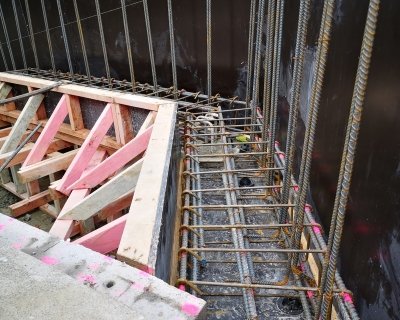
Concrete structures, reinforced with steel, are shaped using plywood and boxing timber, securely braced into position. Formwork timber can be either smooth-coated or textured to achieve the desired finish. A concrete vibrator must be used to remove air pockets and maintain a consistent finish. Common examples include landscaping steps, concrete column piles and beams.
Timber piles.
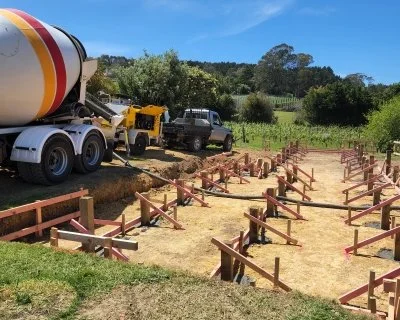
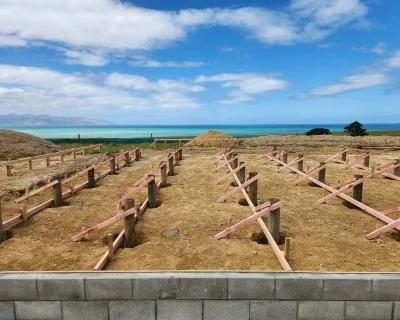
Used on sloping sites or floodplains, piles in the ground are encased in concrete to enhance strength and prevent rot. They are cut to height then bearers and joists are attached to these to form a floor structure. Piles can be round poles or square posts. The post size, hole diameter and depth vary depending on engineer requirements derived from soil assessments and load-bearing capacities.
Footings.
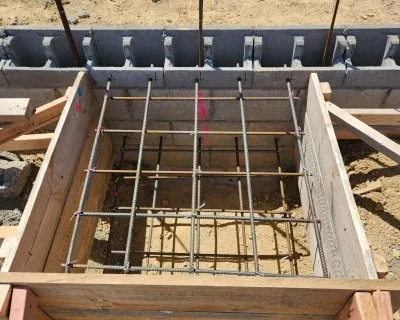
A concrete and structural steel foundation formed in the ground in a trench-like excavation. The steel cages have starter bars attached that protrude above the finished concrete pour height, which will later tie into other structures like slabs, masonry walls or swimming pools. These must be made efficiently in dry conditions as rain can easily ruin these clay trenches.
Concrete piles.
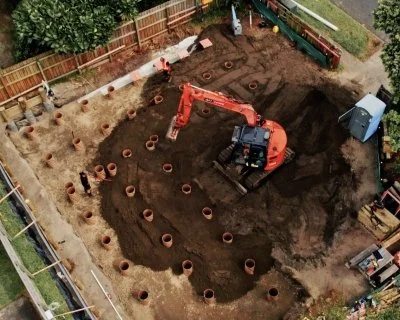
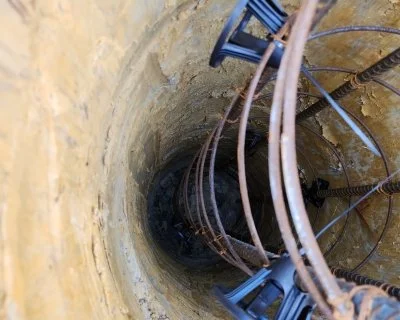
These are either formed in holes drilled into the ground or in formatube protruding out of the ground, centred with spiral reinforcing steel cages, encased in high-strength concrete with a minimum of 75mm coverage to prevent rusting of the steel. These are either tied into a beam or a slab or partially poured then a timber pile connected into the second concrete pour.
Barrier piles.
These are simply an underground retaining wall designed to stop earth moving downhill when a load is applied above. They can retain water tanks, swimming pools, or buildings near the edge of a bank. The inground piles encased with concrete can have concrete formwork capping across the top linking the piles. They can be timber or concrete.
If you need a contractor for Concrete slabs, Timber piles, Masonry Blockwork or Formwork, in North or West Auckland we are the best choice.
We provide our House Foundations contractor services in Central Auckland, North Auckland, and West Auckland.
From Ponsonby to Helensville, and Coatesville to Warkworth. Covering all Suburbs in Central Auckland, West Auckland, Rodney, and North shore.
We are also contractors in Residential and Lifestyle property Earthworks such as Excavations, Retaining walls, Driveways, and Building platforms.
Did you know we trench and dig then install Utilities such as Rainwater tanks, Septic systems, and Electrical mains.